Office Address

Burzahama, Opp. Archeology, Hazratbal, Srinagar, J&K, India

Phone Number

+91 7006339901 / +91 9419055504

Email Address

kmrdiscoverbabatourtravel88@gmail.com

Send a Booking Enquiry

Fill in your details and we’ll get back to you within 24 hours.

Heritage of Kashmir

Mughal Gardens

Built between the 16th and 17th centuries by emperors Akbar, Jahangir and Shah Jahan, the Mughal Gardens of Kashmir are a string of terraced paradises laid out around Dal Lake and the Anantnag valley. Cypress-lined avenues, central water channels, hand-cut chinar trees and snow-fed cascades make them some of the finest examples of Persian-Islamic garden art in the world.

Explore Mughal Gardens

Places You Cannot Miss

Royal pleasure gardens, terraced lawns, cascading fountains and seasonal blooms — these six landmarks capture the floral, architectural soul of Kashmir's Mughal heritage. Pick your favourites, then send us an enquiry below to build a custom Mughal Gardens itinerary.

Nishat Bagh

Nishat Bagh

Garden of Bliss

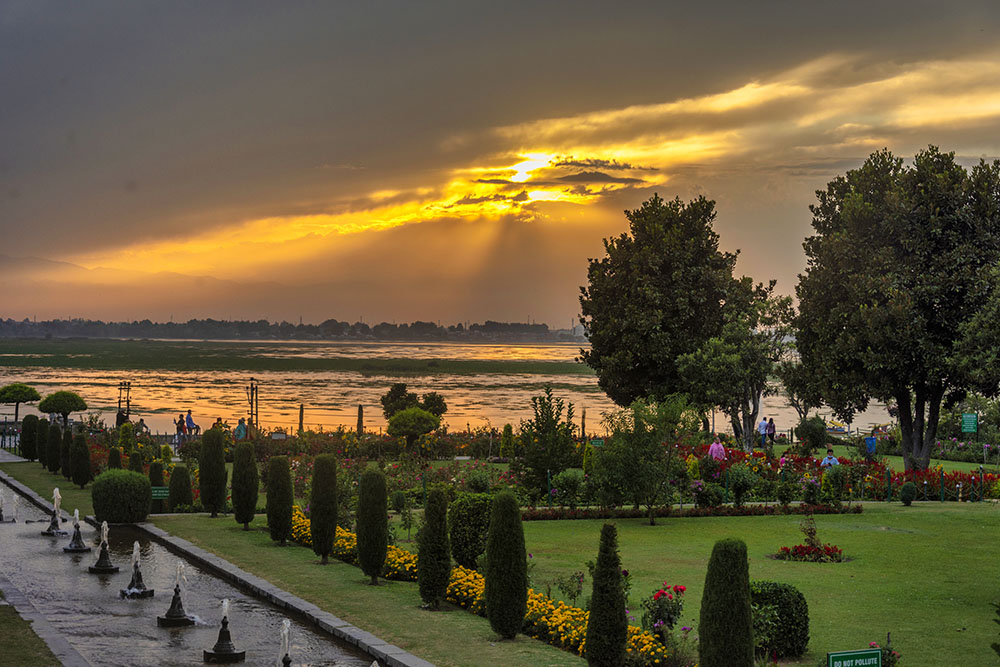
Built in 1633 by Asif Khan, brother-in-law of Emperor Jahangir, Nishat ("Garden of Bliss") is the second-largest of Kashmir's Mughal gardens. Twelve terraces representing the signs of the zodiac descend toward Dal Lake, framed by towering chinars, marble water channels and the Zabarwan range rising directly behind — a textbook Char Bagh layout in its full glory.
Shalimar Bagh

Shalimar Bagh

Garden of Love

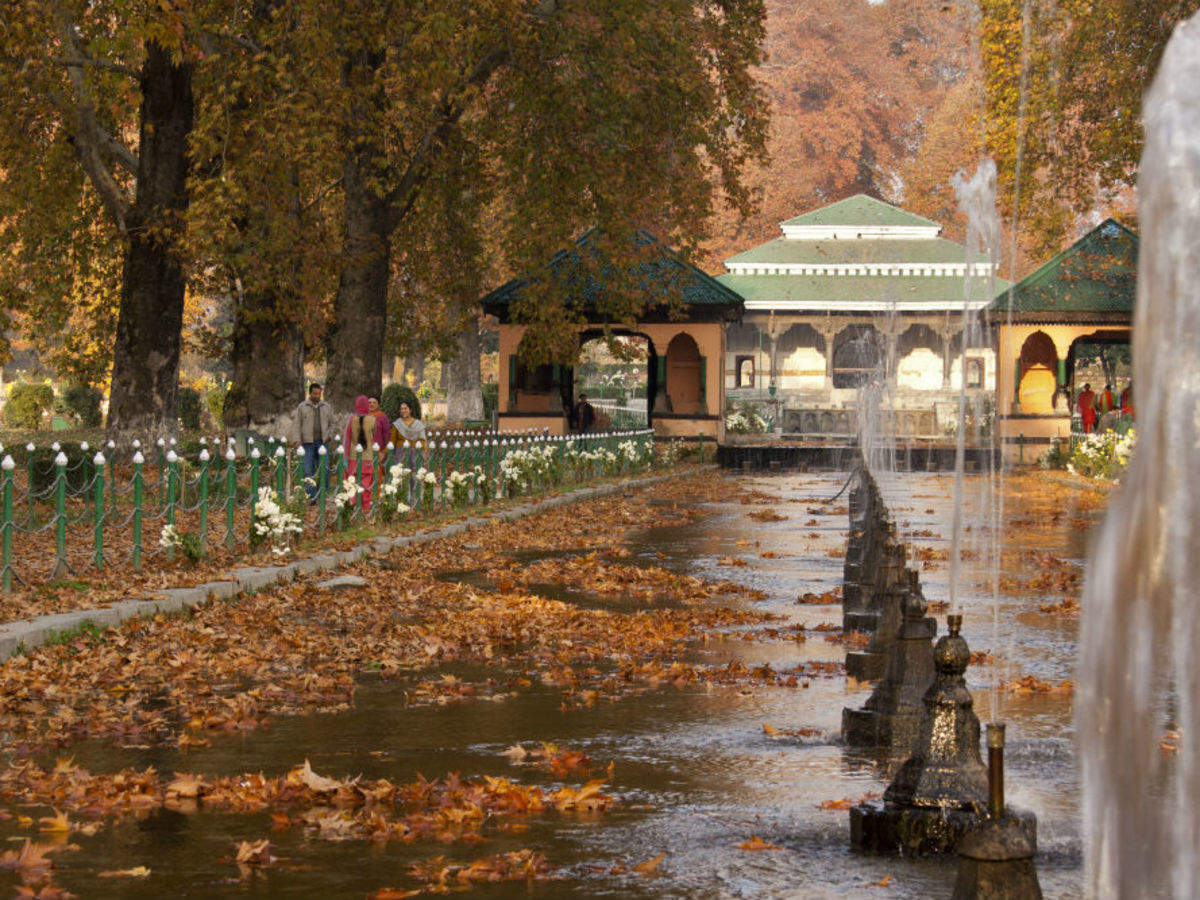
Commissioned in 1619 by Emperor Jahangir for his beloved wife Nur Jahan, Shalimar ("Abode of Love") is the most famous of all Mughal gardens. Its three terraces — public, royal and zenana — are joined by a central canal lined with 410 fountains and chinar trees that turn fiery red every autumn. The pavilions of black marble and the evening light shows are unmissable.

Chashme Shahi

Chashme Shahi

Royal Spring

Built in 1632 by Shah Jahan, Chashme Shahi ("Royal Spring") is the smallest but arguably most charming of the Mughal gardens. A natural mineral spring rises in the middle of the upper terrace and cascades down through stone aqueducts. The water is reputed to have healing properties and was famously preferred by Pandit Nehru — bottles of it still flow daily.

Tulip Garden

Tulip Garden

Spring Bloom

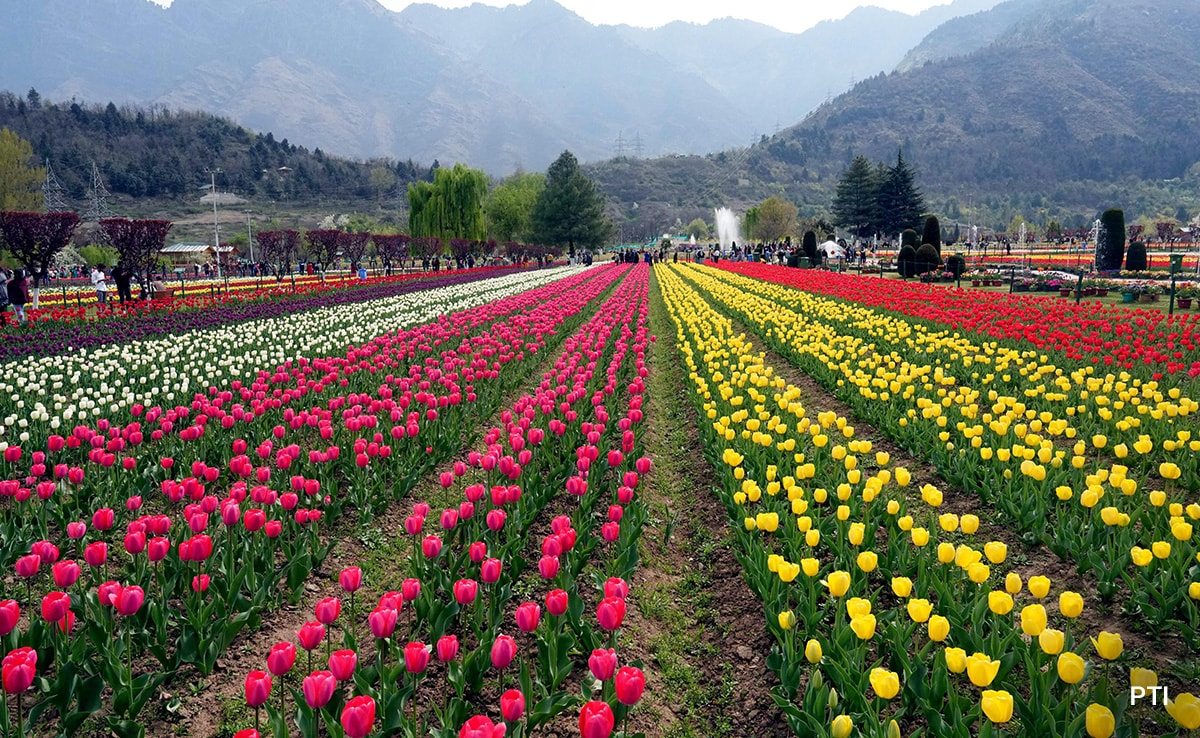
Asia's largest tulip garden — Indira Gandhi Memorial Tulip Garden — sits on the foothills of the Zabarwan range above Dal Lake. Spread across 30 hectares of terraced lawns, it bursts into life every spring with over 1.7 million tulips in 73 varieties. The bloom lasts barely four weeks (late March to mid-April) but it is one of the most spectacular sights in north India.

Badamwari

Badamwari

Almond Blossom

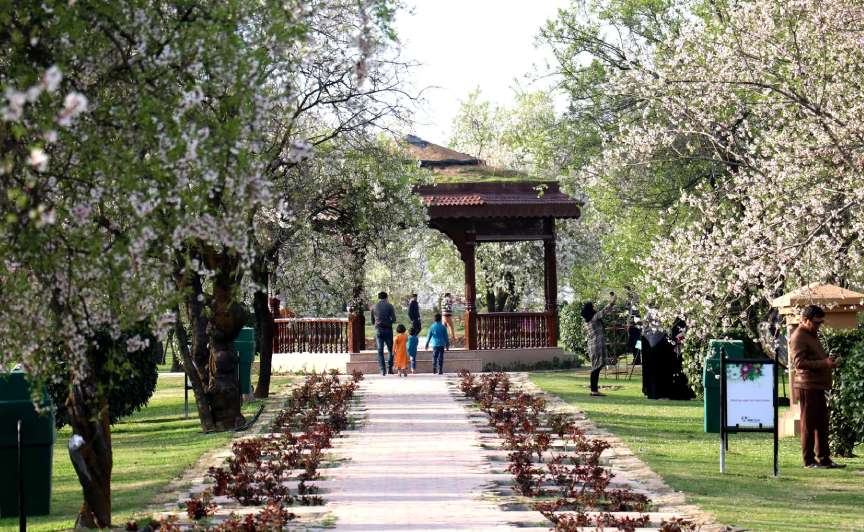
Tucked beneath the Hari Parbat fort in old Srinagar, Badamwari ("Almond Garden") was first laid out in the 16th century and lovingly restored in 2008. In late February and early March it becomes the first sign of spring in the valley, when thousands of almond trees burst into pink and white blossoms — locals come for picnics, poets for inspiration, and photographers for the soft, snow-edged light.

Achabal Garden

Achabal Garden

Empress's Garden

Sixty-five kilometres south of Srinagar near Anantnag, Achabal was redesigned by Empress Nur Jahan in 1620 around a powerful spring that gushes out of the foot of the Sosanwar hill. Three terraces of cascades, a fish-filled tank and tall chinars make it one of the most peaceful — and least crowded — of all Kashmir's Mughal gardens, perfect for a quiet day-trip away from the city.